The craft
The Weave
What a pit loom does that nothing else can.
Banaras has been weaving silk for something like six hundred years, and the method has barely moved. A pit loom is a frame over a hole in the ground; the weaver sits at floor level with their feet in the pit, working the treadles, while a second person sits above and lifts the warp threads by hand to make each motif appear.
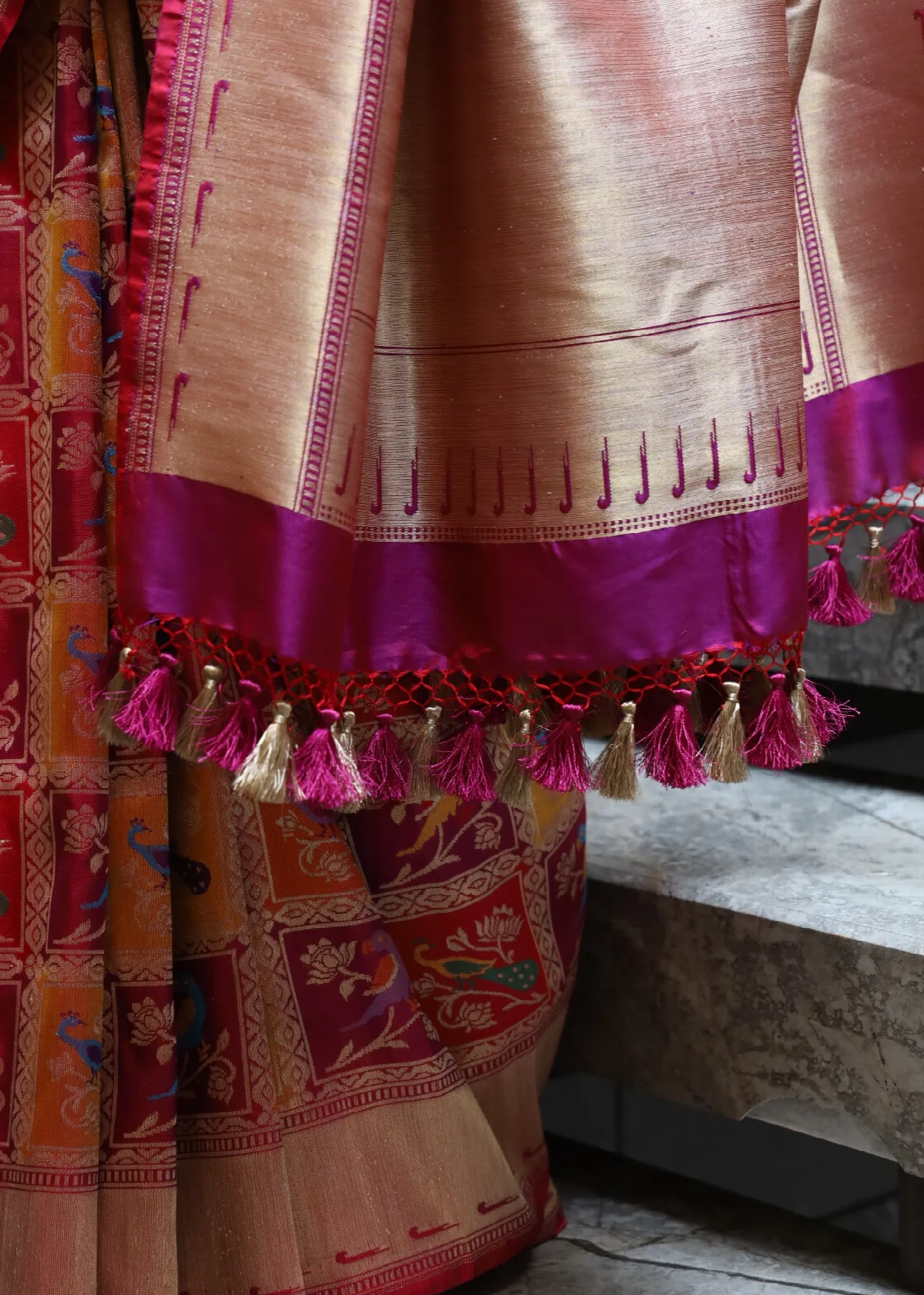
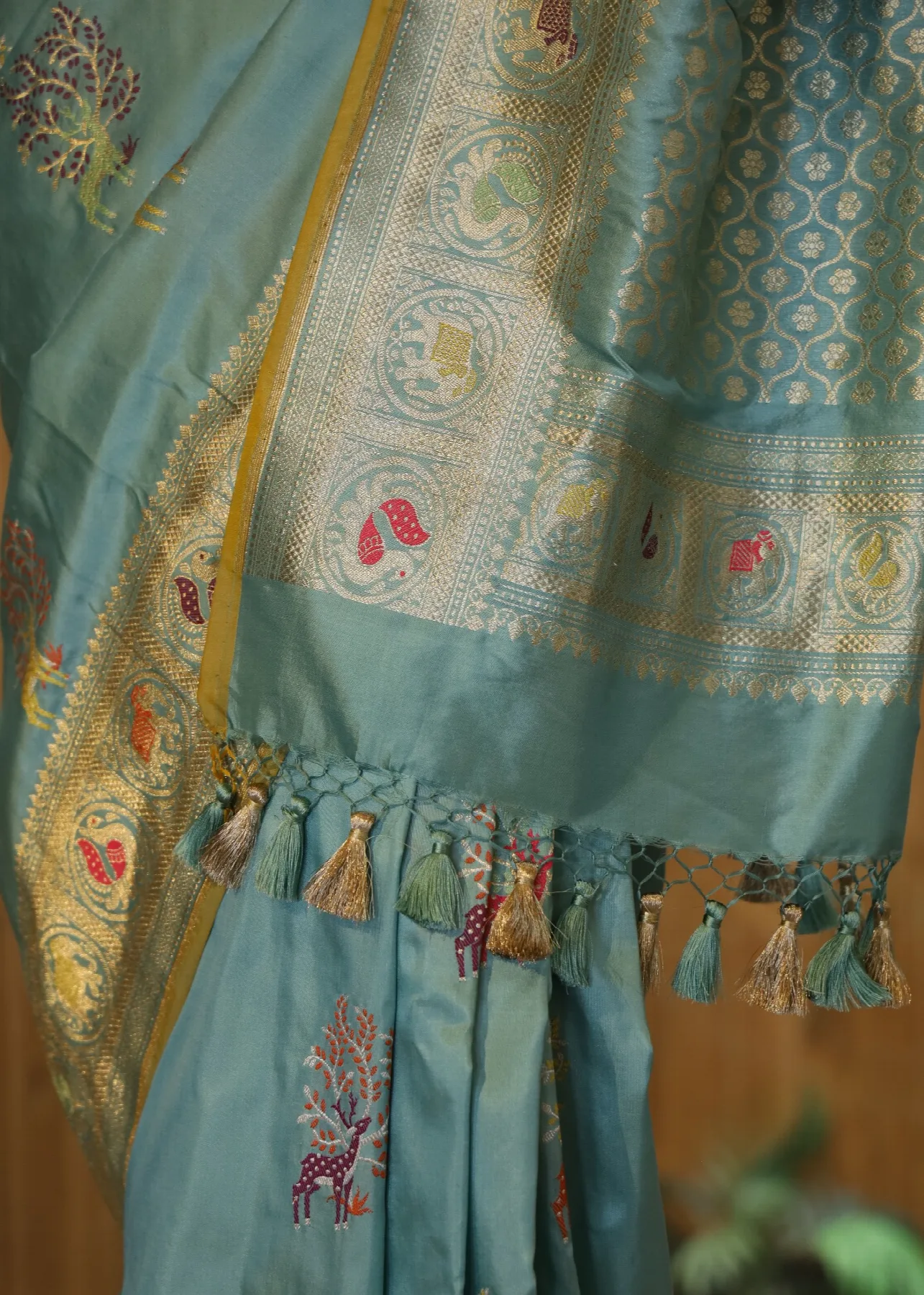
Nothing about that is efficient, and that is the point. A power loom can produce a saree in an afternoon. A kadhwa Banarasi — where every motif is woven in separately rather than carried across the back of the cloth — takes two people several weeks, and you can tell the difference by turning it over.
The design
A motif is drawn on graph paper and punched into cards — one card per row of the weave. The cards are the program; the loom is the machine that runs it.
The loom
Two people work a single pit loom. One throws the shuttle; the other lifts warp threads by hand so each motif is woven in rather than printed on.
The finishing
The saree comes off the loom, is washed, and the loose zari ends are cut back by hand. Only then does anyone know whether the colour came out right.

A short glossary
The silks
Every ground behaves differently. This is what each one is, and what it is good for.

Pure Katan Silk Saree
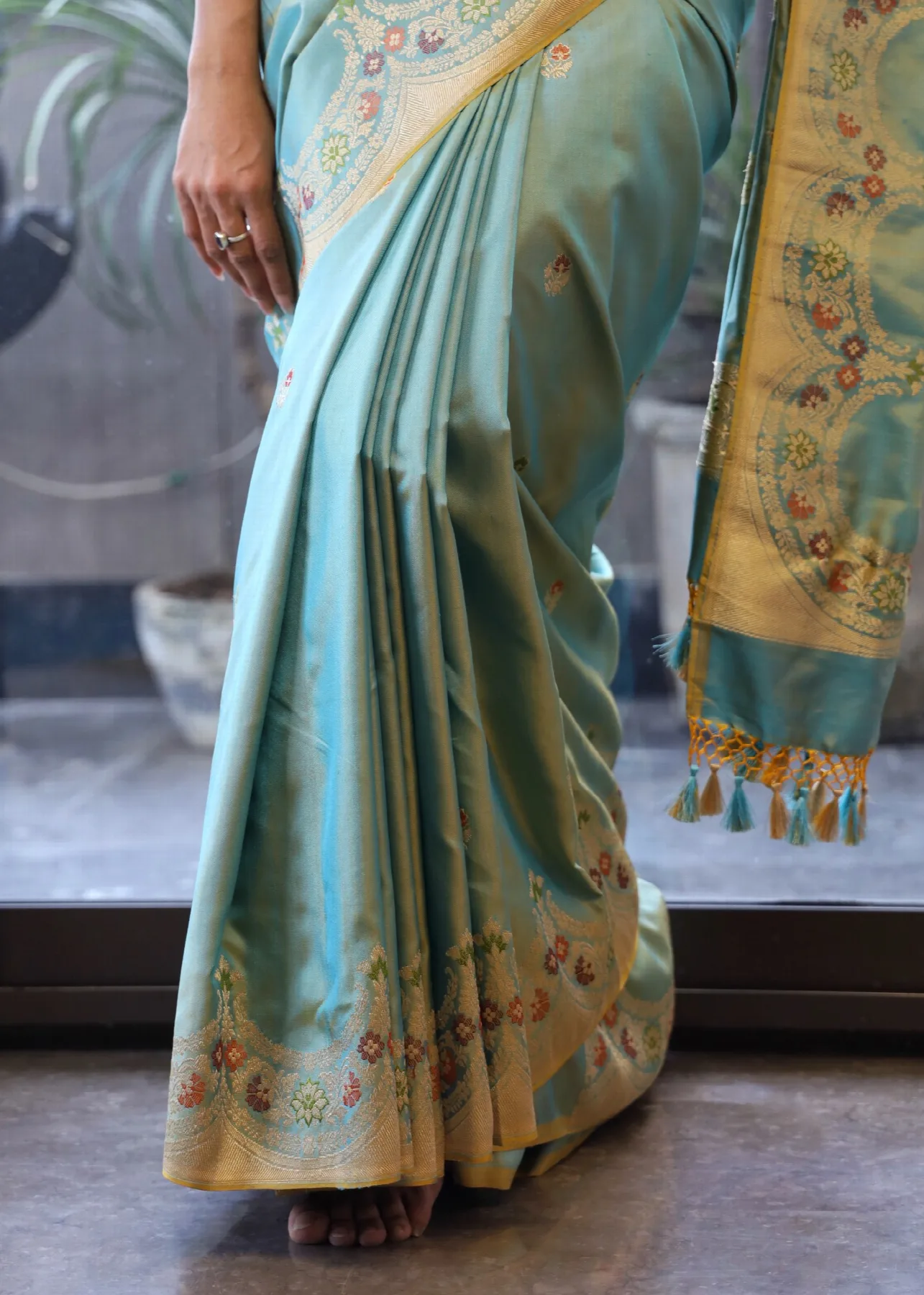
Pure Ektara Katan Silk
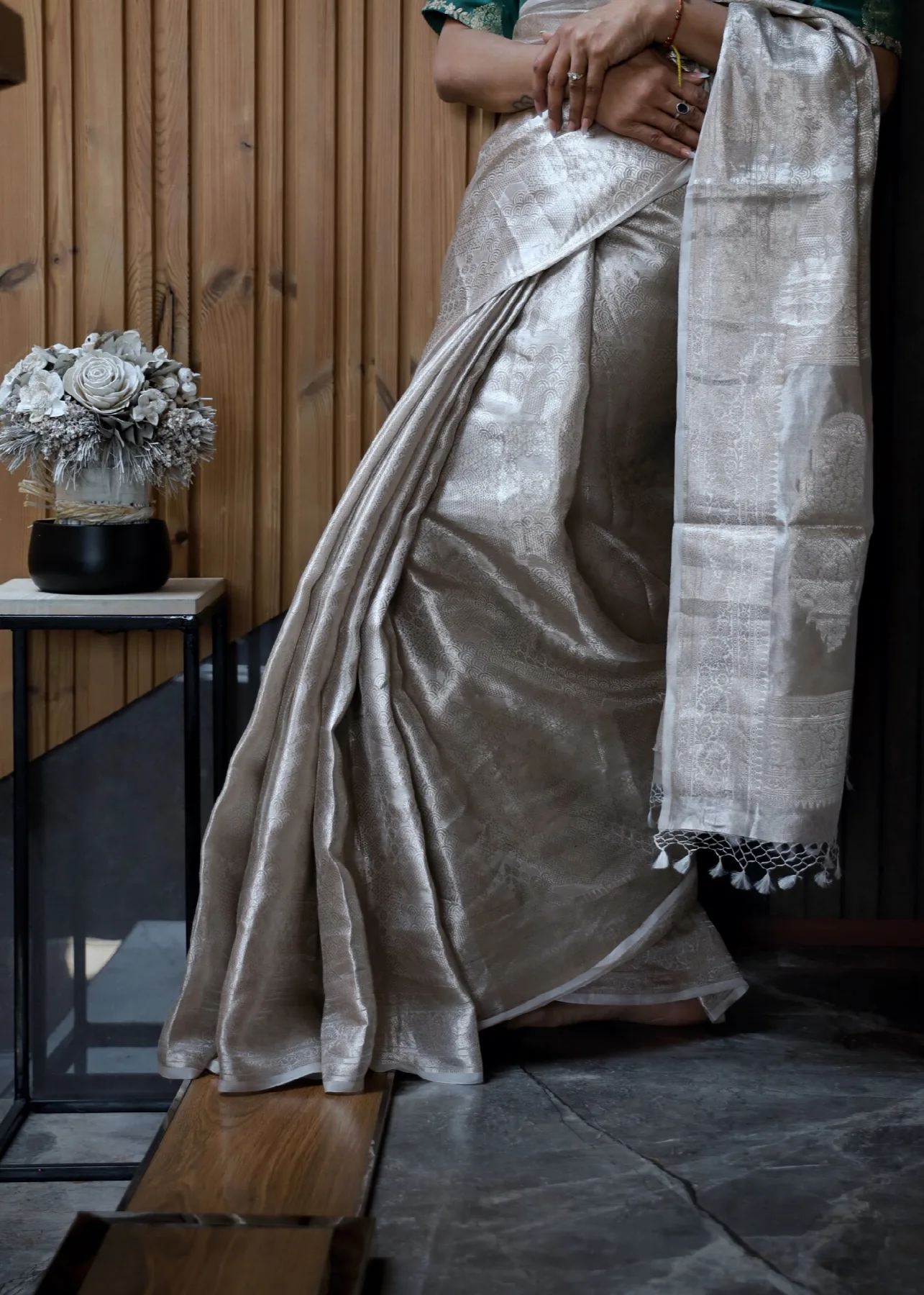
Pure Tissue Silk

Pure Katan Kora Silk Saree

Pure Mushroo Silk

Pure Munga Silk

Pure Kora Silk

Pure Silk

Pure Georgette Saree

Pure Tusser Saree
Afterwards
Looking after it
A Banarasi saree outlives the person who buys it, if it is stored properly.